Service Overview
Pearland turf installations face specific repair triggers that don't always appear in generic turf repair literature. Clay soil movement during wet-dry cycles causes base shifting that shows up as rippling or edge separation — particularly in neighborhoods like Shadow Creek Ranch and Silverlake where expansive clay soils are common. Heavy storm events load drainage systems and can displace infill in sloped installations. PISD athletic facility support areas near Pearland High School and Dawson High School experience edge wear from equipment movement and repetitive directional traffic that gradually loosens perimeter anchoring.
The critical decision in turf repair is distinguishing between surface-level issues that are straightforward to correct and structural problems that require base correction before surface repair will hold. Turf Installation of Pearland begins every repair engagement with an honest diagnostic assessment. We identify what the visible symptom is, what is causing it, and what repair approach will actually fix it versus what will mask the problem temporarily.
Seam repair is one of the most common requests we receive from Pearland homeowners. Seams that were installed correctly can separate years later due to base movement or thermal cycling. Seams that were installed poorly can separate much earlier. In either case, a floating seam edge creates a trip hazard and accelerates adjacent surface deterioration as the exposed edge folds and infill migrates out of the seam zone. Correct seam repair involves cleaning the seam channel, preparing the backing, applying proper adhesive or mechanical fastening, and ensuring the repair zone is properly weighted during cure.
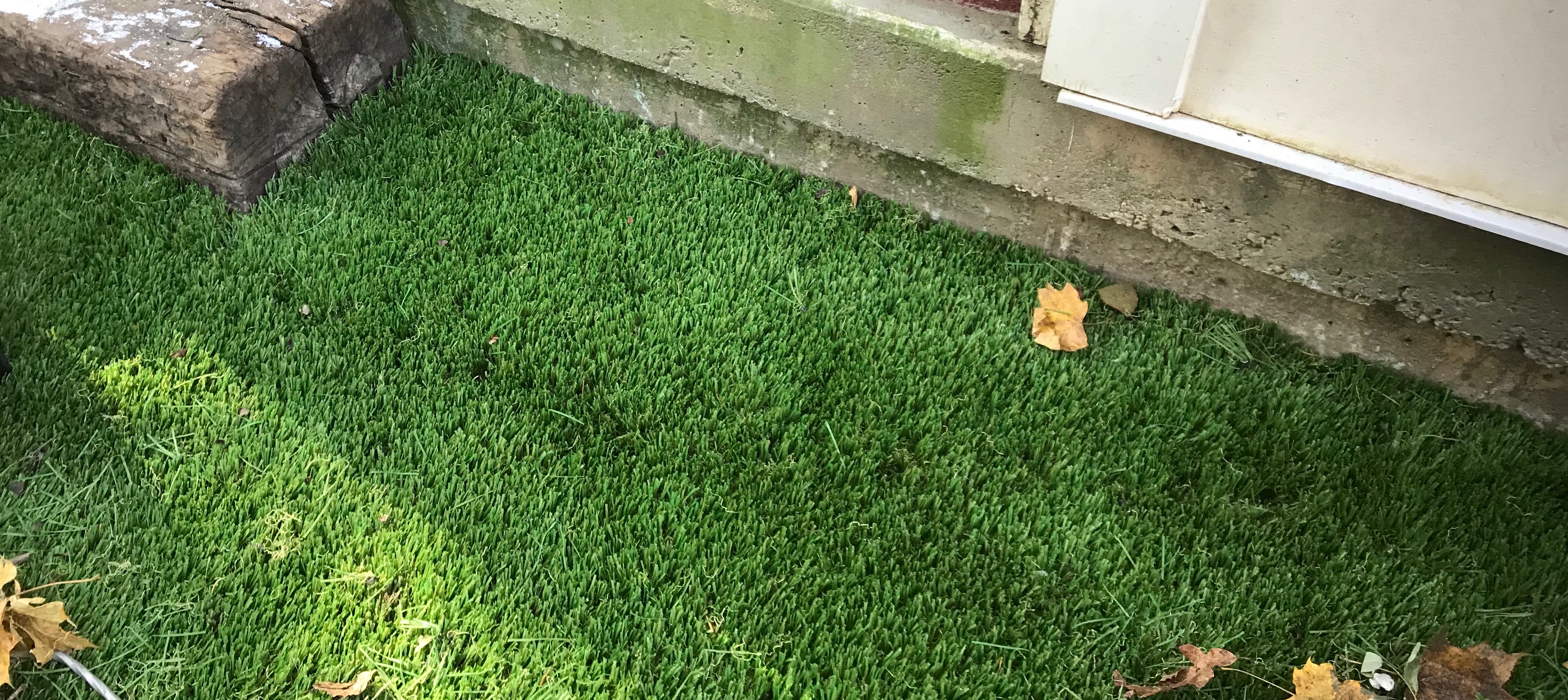
Edge separation at concrete, pavers, and landscape borders is a repair request common throughout Pearland's newer planned developments. As properties settle, as tree roots grow, and as traffic loads affect perimeter zones, edge anchoring can fail. We assess the cause of the separation before recommending the repair approach — some edge failures need only re-anchoring, while others require base correction at the perimeter before re-anchoring will hold.
For pet areas in Pearland homes — backyards in West Oaks Village, Southern Trails, and the Centennial Park corridor — concentrated pet traffic creates localized wear and infill depletion that benefits from targeted repair and infill top-off rather than full replacement. We assess pet-use zones specifically and recommend the minimum effective repair scope.
Pearland Town Center commercial turf faces a different repair profile — concentrated foot traffic at entry points and corner transitions creates localized edge and seam stress from repeated pedestrian load. We've addressed these failure patterns in commercial installations across the Pearland entertainment corridor and understand the repair scope required to keep commercial surfaces functional and appearance-ready.
What Is Included in Artificial Turf Repair
Repair scope is determined after site assessment. Common elements included in Pearland turf repair projects:
Diagnostic Assessment
On-site evaluation to identify root cause of surface problems before recommending repair approach.
Seam Repair
Proper cleaning, adhesive application, and re-seaming of separated or failing seam zones.
Edge Re-Anchoring
Perimeter edge correction at concrete, pavers, bender board, or landscape border transitions.
Infill Repair and Top-Off
Localized infill restoration in depleted zones from pet use, heavy traffic, or storm migration.
Rippling and Base Correction
Base-level correction where soil movement has caused surface rippling or low-spot development.
Patch Installation
Replacement of damaged turf sections where tearing, burning, or localized failure has compromised the surface.
Turf Repair Process
Turf Installation of Pearland approaches repair projects with diagnosis before prescription — we identify the cause before recommending the fix.
1. Property Assessment
We evaluate the repair area, surrounding surface condition, drainage behavior, and base stability to understand what is driving the visible symptom.
2. Repair Scope Documentation
Findings are documented and repair options are presented with clear explanation of what each approach addresses and how long it should hold.
3. Base Correction If Required
When base movement or drainage failure is causing the surface problem, base correction is completed before surface repair begins.
4. Surface Repair Execution
Seam repair, edge re-anchoring, patching, or infill restoration is completed according to the approved scope.
5. Post-Repair Review
Completed repair is inspected with the property owner and any monitoring recommendations are noted for future maintenance visits.
Common Repair Scenarios in Pearland
Repair requests in the Pearland area cluster around several identifiable surface failure patterns.
HOA Property Seam and Edge Failures
Shadow Creek Ranch and Silverlake properties where clay soil movement has caused edge separation or seam lifting that triggers HOA notices.
Pet Area Wear and Infill Depletion
Backyard pet zones in Southern Trails and West Oaks Village where concentrated dog activity has created worn patches and low-infill zones.
Storm and Drainage Damage
Post-storm surface repair for properties where heavy Brazoria County rainfall events displaced infill or overloaded drainage layers.
Athletic and High-Traffic Area Edge Wear
Perimeter and transition zone repair for PISD athletic support areas and Pearland Town Center commercial turf with equipment or crowd traffic damage.
Why Correct Diagnosis Matters for Pearland Turf Repair
Surface-only repair on a base problem is money spent twice. Turf Installation of Pearland invests in diagnosis before repair to make sure the work addresses the actual failure mechanism. Pearland's expansive clay soils, storm event frequency, and climate-driven thermal cycling create specific repair conditions that require honest assessment. We tell you what we find and what it will take to fix it correctly.
Turf Repair Scope Factors
Repair pricing reflects the type and extent of failure, not a flat-rate assumption. Primary variables include:
Failure Type
Seam repair, edge re-anchoring, patching, and base correction are different scopes with different labor requirements.
Affected Area Size
Localized failures are less costly than distributed edge failures or large base correction areas.
Root Cause Complexity
Surface-only failures are simpler to repair than base movement or drainage failures that require structural correction.
Material Requirements
Patch turf, infill material, adhesive, and anchoring hardware are project-specific costs based on repair scope.
Access and Staging
Repairs in tight backyard spaces or behind landscape features may require additional crew time for access and material staging.
Service Area Coverage
Turf Installation of Pearland provides artificial turf repair throughout Pearland, TX and surrounding communities including Friendswood, Manvel, Alvin, League City, Pasadena, South Houston, Webster, La Porte, Missouri City, Sugar Land, Rosenberg, Richmond, and Houston. Repair service for residential, HOA, commercial, and athletic facility turf installations.
Frequently Asked Questions
How do I know if my turf needs repair or full replacement?
Repair is appropriate when the turf backing and pile are in generally good condition but specific failure points have developed. Replacement makes more sense when backing integrity is compromised across the surface, pile height is depleted broadly, or drainage layer failure is widespread. We assess current surface condition and provide an honest recommendation.
Can you repair turf that was installed by a different contractor?
Yes. We assess the existing installation on its own merits and recommend repair scope based on current conditions. We'll note any installation quality concerns we observe that may affect repair durability.
How long do turf repairs last?
Repairs that address the root cause of the failure — particularly when base correction is included — last as long as the surrounding installation. Surface-only repairs on structural problems are temporary. We're direct about what the repair will and won't address.
Can pet damage to backyard turf be repaired?
Yes. Concentrated pet-use wear and infill depletion in localized zones can typically be corrected with targeted infill top-off and pile restoration. More significant pet digging damage may require patching.
Is storm damage to turf a covered repair scenario?
Surface damage from storm events — displaced infill, edge separation from debris impact, drainage overload — is addressed through standard repair service. We assess storm damage and scope repair appropriately.
Do you repair turf near PISD facilities?
Yes. We provide repair service for turf installations in athletic support areas, team gathering zones, and commercial properties adjacent to PISD campuses throughout Pearland.